
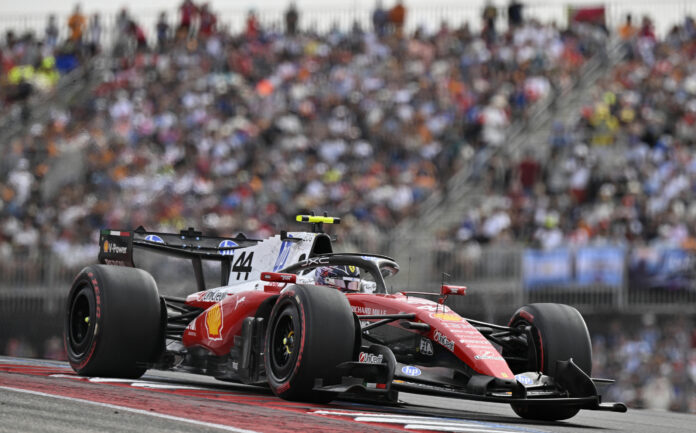
Pirelli has drawn a hard line in the sand for the Qatar Grand Prix. Every single driver must change their tyres at least once every 27 laps. This rule makes a two-stop race a certainty for all twenty-two cars on the grid. The tyre maker says this limit prevents the rubber from being pushed past its safe life.
The circuit itself creates a brutal test for the rubber. “The circuit features 16 corners and its high level of severity stems from the succession of high-speed turns, which subject the tyres to continuous stress for much of the lap,” reads Pirelli’s weekend preview, according to Formula1.com. That continuous stress wears the tyres down fast. The smooth track surface combined with high heat encourages a problem called graining. This graining makes the rubber wear even faster than normal.
Drivers used to manage their pace to save tyres in the past. They had to lift off the throttle or brake early. Now, the new rules change that dynamic entirely. Pirelli introduced this limit to let drivers push harder during their stints. The restriction reduces the need for drivers to manage their speed just to survive. The teams can focus on pure speed instead of trying to stretch a set too far.
The 2026 tyres are built to handle more punishment than before. The cars generate lower aerodynamic loads than the 2025 models did. This means the tyres face less downforce pressure on the track. Pirelli says the maximum lap limit has increased compared to last year for this reason. The reinforced construction allows the teams to run longer stints than they could before.
Why Two Stops Are Now Mandatory
The absence of the Sprint format makes this easier for the teams. Last year, the Sprint race ate into the available mileage on each tyre set. Now, drivers have fresh sets for the main event without that prior wear. Teams can fine-tune their cars during free practice with more confidence. They know exactly how many laps each set can last before a change is needed.
This clarity helps engineers plan the race strategy from the start. They do not need to guess if a set will hold up for a long stint. The limit is fixed at 27 laps for every set of tyres. No driver can go beyond this number without a penalty. This creates a predictable rhythm for the entire race weekend.
A minimum two-stop event for all drivers will inevitably occur during the race. This outcome is not a guess but a direct result of the lap limit. Even the fastest cars cannot stretch a set to cover the full race distance. The total race distance exceeds what two sets of tyres can handle under this rule.
Fans can watch every session live on F1 TV Pro. The broadcast includes onboard cameras for all twenty-two drivers. The platform also offers 4K Ultra HD coverage on up to six different devices. The F1 TV broadcast team will bring their established expertise to the English-language coverage. The broadcast will show tyre wear and strategy shifts in high definition.
The restriction lets drivers run faster in each stint. They no longer need to worry about ruining the tyre structure. The limit protects the tyre while keeping the racing fast. According to reports, performance degradation stays relatively limited despite high wear levels. This means the cars will stay fast right up to the pit stop.
Experience from previous years has shown that the tyres deliver consistent performance. The teams can rely on this consistency to plan their pit stops. The race strategy is now a simple math problem for the engineers. They know the limit is 27 laps and the race is longer. The solution is to pit at least twice.
Aerodynamic load generation is lower in the 2026 cars compared to their predecessors. This reduction in load helps the tyres last longer per lap. It also allows the lap limit to be set higher than last year. The combination of new cars and new tyres changes the race flow. The Qatar Grand Prix will see constant action as drivers fight for position.